Removing rust stains from tiles and natural stone

By Osman Orman · Tile and technical specialist at Tegelmonsters
Remove rust stains with a ready-to-use, acid-free rust remover. Never use ordinary acid on calcareous natural stone, as it damages the stone.
Removing the stain is half the job. As long as the source remains, new rust will keep building up and the stain will return.
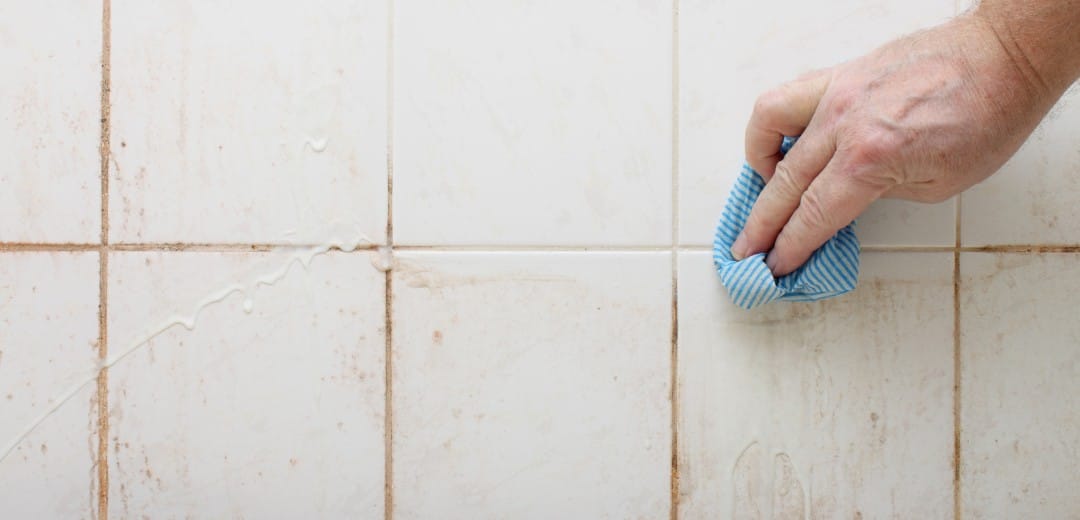
Rust on tiles forms when metal, moisture, and oxygen come together: furniture legs, reinforcement under a screed, or iron-containing water. For acid-resistant ceramics and porcelain, an acid-free or slightly diluted cleaner works; for calcareous natural stone, only an acid-free agent is effective. Work on a slightly damp surface, let it act for 5 to 15 minutes, and rinse thoroughly. If you are unsure how a tile will react, request free samples via tegelmonsters.nl/tegels and test on a scrap piece first.
In this article
- How can you remove rust stains without damage?
- Where do rust stains on tiles come from?
- What step-by-step plan do you use to remove rust from tiles?
- How do you remove rust from natural stone?
- Does vinegar or cola work against rust stains?
- How do you prevent rust stains on tiles?
- How do you put together a sample package for a low-maintenance project?
- Frequently asked questions
Method
How can you remove rust stains without damage?
The safest approach depends on the material you are working with. A dense ceramic tile tolerates diluted acid well, whereas a calcareous natural stone will become dull from it. Therefore, you must first determine what is present: glazed ceramic, porcelain stoneware, terracotta, or natural stone. Porcelain stoneware is the densely fired porcelain tile with very low water absorption. Only when you know the material should you choose a suitable product. Rust is not the only stain that dulls tiles: a grey cement haze after new tiling and dirty grout each require a specific, material-safe product.
There are four routes, increasing in intensity. Clean water with a sponge only removes a fresh, superficial swipe. An acid-free rust remover binds the iron particles and is safe on almost any surface. A diluted acid works quickly on acid-resistant ceramics but should not be used on limestone-like natural stone. And for a deeper, ingrained stain, repeat the treatment instead of scrubbing harder. In all cases, lightly dampen the surface beforehand so that the product continues to work at the top.
In our showroom in Utrecht, we see that professionals primarily want to know which product is safe on which tile. The answer lies in the substrate and in patience: test first, then treat. If you would like to calmly review the basics of tile cleaning, our explanation on cleaning tiles will help you on your way. Our team is happy to help if a stain proves stubborn.
Cause
Where do rust stains on tiles come from?
Rust is oxidized iron. Where unprotected metal comes into contact with water and air, iron oxide forms, and this penetrates the surface as a brownish-red stain. A tile itself does not rust, but absorbs iron compounds from something lying on or underneath it. A porous or unglazed tile absorbs these compounds more deeply than a dense, glazed surface, making the stain more stubborn there. This is precisely why the tile's water absorption determines how deep the problem is.
The most frequently asked question our team receives is about that coming back. People remove the stain, and a few weeks later it is back. This is because the source remained untouched. The table below lists the three main sources side by side, along with where to recognize them and how to remove them.
In new construction projects, we often see rust originating from the substrate. If the reinforcement or rebar is positioned too close to a thin screed, moisture can reach the iron, causing the color to slowly seep up through the joint. This situation cannot be resolved with just a cleaner, as the source remains active. The deeper a stain is embedded in a porous tile, the more important the underlying structure becomes, something related to the water absorption of ceramic tiles . This water absorption determines how far iron-containing moisture can penetrate.
Step-by-step plan
What step-by-step plan do you use to remove rust from tiles?
A fixed work sequence makes removing rust stains predictable. These seven steps apply to ceramics, porcelain, and calcareous natural stone when using an acid-free agent. If you choose a diluted acid for acid-resistant ceramics, the sequence remains the same, and you pay extra attention to the rinsing.
- First remove the source: slide the piece of furniture away or remove the metal object from the tile.
- Lightly dampen the surface with clean water so that the product works at the top and does not penetrate too quickly.
- Apply the acid-free rust remover undiluted, exactly on the stain and slightly around it.
- Leave on for 5 to 15 minutes. Do not let the product dry out; therefore, work in manageable areas.
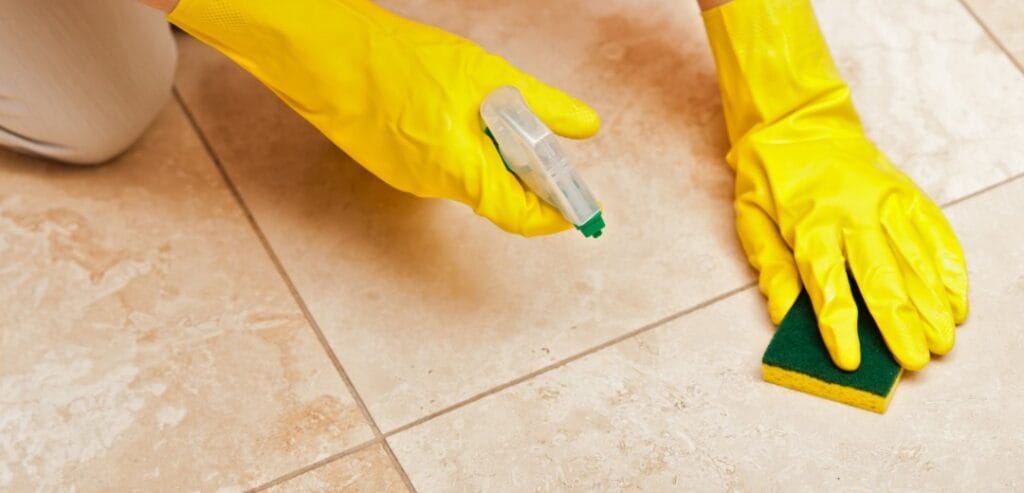
- Gently buff with a sponge or white pad in a circular motion, never with steel wool.
- Rinse one to two times with clean water until the rinse water is clear.
- If the stain is still stubborn, repeat the treatment; a deep stain requires time, not force.
Two details determine the final result. Work in areas that you can rinse off within the contact time, as a dried product leaves edges behind. And keep the contact time short when working with natural stone, as porous stone absorbs moisture more quickly. Wear gloves and ensure fresh air in the room. This simple precaution is standard practice for this type of maintenance.
A recurring situation we see is scrubbing hard with steel wool on a light stain. This leaves behind fine metal residue that rusts itself, causing the problem to worsen. Always start with an acid-free product and a soft sponge, and give the product time to work. A scrap piece or tile sample is the best test area before tackling the visible floor.

Recommended solution
Fila Norust 75 ml
A ready-to-use, non-acidic rust remover for surface rust stains. Safe on ceramics and porcelain, natural stone and marble, terracotta and outdoor tiles, because the product binds the iron particles without affecting the lime in the stone.
€ 19,70
For a single stain under a furniture leg or near a drain, the 75-milliliter bottle is more than sufficient. Because the product is ready to use and acid-free, you do not need to dilute it and can also use it on a delicate marble floor. The cleaner is part of the maintenance line on our tile care page , where you will find more solutions for specific stains.
Natural stone
How do you remove rust from natural stone?
The difference between ceramic and natural stone lies in their composition. Ceramic tiles are fired clay with a glassy structure, chemically stable, and resistant to weak acids. Lime-containing natural stone contains carbonate, which reacts immediately with an acid: the lime dissolves along with it, the surface becomes matte, and the shine disappears. When removing rust stains from stone, that is the core of the problem. You want to dissolve the iron oxide without damaging the lime in the stone, and this can only be achieved with an acid-free agent that binds the iron particles.
The density of ceramics is reflected in their water absorption, the property that ISO 10545-13 links to chemical resistance and that EN 14411 classifies into groups. Low water absorption means a dense tile that absorbs little moisture and therefore little cleaner. The diagram below compares the water absorption per ceramic class, as this value predicts how deep a rust stain might penetrate and how carefully you need to apply the cleaning agent.
Water absorption per ceramic class (percentage)
Lower water absorption means a denser tile in which rust penetrates less deeply. Scale runs up to 12 percent. Classification according to EN 14411.
If you are unsure whether you are dealing with ceramic or real stone, a leftover piece will provide the answer. A dense ceramic tile with a clean, polished edge is almost always porcelain; our explanation of rectified tiles shows how to recognize this edge finish. Those seeking the warm look of stone but wanting the ease of maintenance of ceramic will find a practical alternative in porcelain marble-look tiles that does not contain acid-sensitive lime.
Home remedies
Does vinegar or cola work against rust stains?
Vinegar and cleaning vinegar contain acetic acid, cola contains phosphoric acid, and lemon juice contains citric acid. All three are acids that can partially dissolve light rust on a smooth, acid-resistant ceramic tile. So far, the well-known advice is correct. The point lies in the limitation: these home remedies are not buffered, so their strength diminishes rapidly during soaking and the result becomes uneven. On a larger floor, you notice this in the areas that do and do not get clean.
For calcareous natural stone, an acid-based home remedy is less suitable. Marble, travertine, and limestone react with any acid and lose their shine, so vinegar, cola, and lemon juice do more harm than good. Baking soda is a safer alternative, being mild and slightly abrasive, but its effect on ingrained rust remains limited. For ceramics, these remedies are a last resort; for natural stone, it is preferable not to use them, and they usually fall short for a lasting result.
An acid-free cleaner solves this. The product binds the iron particles and leaves the lime in the stone untouched, ensuring you get the same predictable result on marble and ceramic. In the projects handled through us, we see that professionals therefore routinely choose a professional product instead of a kitchen cabinet solution. This ensures that removing rust stains remains a controlled process, not a gamble.
Choose a tile that does not hold stains well. A dense, rectified porcelain makes removing rust stains simple and stays sleek for a long time. Assess the surface in person first.
Prevention
How do you prevent rust stains on tiles?
The best way to eliminate the need to remove rust stains is to prevent them from forming. That starts with the metal. Place caps under chair and table legs, do not leave tin cans, tools, or flowerpots with metal bottoms on wet tiles, and wipe away drips from an outdoor tap or fountain before they dry. These small habits eliminate the cause before iron and moisture have a chance to react.
A second approach is protecting the tile itself. A porous or unglazed surface absorbs iron-containing moisture more quickly, causing a stain to penetrate deeper. By impregnating such tiles, you seal the pores, making it easier to wipe away a drop later. This is rarely necessary with dense porcelain, but it is for terracotta and some natural stone. Choosing the right tile therefore reduces maintenance, a consideration linked to the PEI value and the use of the space . The PEI value indicates how wear-resistant the top layer is and thus how well it resists dirt and stains.
Sample package
How do you put together a sample package for a low-maintenance project?
Maintenance starts with the choice, not the cleaning. A dense porcelain stoneware floor with a clean, polished edge leaves little room for moisture penetration and is easy to keep clean. The grout color determines how quickly you see a stain or discoloration: a medium shade is more forgiving than pure white or jet black. Anyone who takes these points into account during the design phase will keep the floor looking pristine for years using only water and a mild cleaner. This makes removing rust stains later on a rare and simple task.
With a sample pack, you assess those properties before ordering. You place three to five tiles of the intended size side by side, test a drop of water, and see how quickly the surface reacts. In the projects managed by us, architects and project managers compile this selection in the Sample Pack so that the wall and floor align. The showroom in Utrecht is available for physical assessment, by appointment for professionals.
Assemble your sample pack per room. Filter by application and size, and request free samples to assess surface, grout color, and maintenance in advance.
Bathroom tiles Kitchen tiles View floor tiles Open the Sample Folder
Rust is one of the stains you encounter on a tiled floor. The complete approach for each stain is described in our guide on cleaning ceramic tiles.
Frequently asked questions
How do you remove rust stains from tiles?
Remove rust stains with a ready-to-use, acid-free rust remover. Lightly dampen the surface, apply the product undiluted to the stain, and let it work for 5 to 15 minutes without drying. Gently scrub with a sponge and then rinse thoroughly with clean water. Always test on an inconspicuous area first when using it on ceramics and natural stone.
Can you remove rust from natural stone?
Yes, but only with an acid-free product. Lime-containing natural stone such as marble, travertine, and bluestone reacts with acid and becomes dull. An acid-free rust remover binds the iron particles without affecting the lime in the stone. Always test on a scrap piece first and rinse thoroughly with clean water afterwards.
Does vinegar work against rust stains?
Vinegar is acetic acid and partially dissolves light rust on acid-resistant ceramics, but it works unevenly. Vinegar is unsuitable for calcareous natural stone, as the acid attacks the stone and leaves dull spots. Cola and lemon juice also contain acid and pose the same risk. An acid-free rust remover provides a more predictable and safer result.
Why do rust stains on tiles keep coming back?
Because the source is still present. Metal furniture legs, rebar or reinforcement close to the surface, and iron-containing water continue to deposit new rust. Remove the source: place felt pads under furniture, keep iron objects away from wet tiles, and filter iron-containing water. Only then will the floor remain clean after cleaning.
How long does a rust remover need to work?
Typically, leave on a slightly damp surface for 5 to 15 minutes. Do not allow the product to dry out, so work in manageable sections. For a stubborn stain, repeat the treatment instead of letting it sit longer. Afterwards, rinse once or twice with clean water until the rinse water is clear.
Can you remove rust stains without damaging the tile?
Yes, by matching the product to the substrate and testing it first. Diluted acid may be used on dense porcelain stoneware, but choose acid-free for calcareous natural stone. Work with a soft sponge or white pad, never with steel wool or abrasive cleaner. If you want to be sure how a tile reacts, request free samples via tegelmonsters.nl/tegels and test on a scrap piece.
Rust away quickly and safely
Tackle the stain with an acid-free product, or request free samples to choose a low-maintenance tile.
Sources
- NEN-EN-ISO 10545-13:2016 – Ceramic tiles: determination of chemical resistance.
- NEN-EN 14411:2016 – Ceramic tiles: definitions, classification and water absorption groups.
- Fila Solutions (2026) – Fila Norust product data: ready-to-use, non-acidic rust remover for ceramics, natural stone, terracotta and outdoor tiles.
- Chemistry of lime and acid – carbonate in calcareous natural stone reacts with acid; acid-free agents bind iron oxide without damaging the lime matrix.
- Industry guidelines for ceramic tiling – setting time, testing on a scrap piece, rinsing and impregnation of porous substrates.