Impregnating natural stone: guide to protection and maintenance

By Osman Orman · Tile and technical specialist at Tegelmonsters
Impregnating natural stone means saturating the pores of the stone with a penetrating agent that keeps moisture and dirt out. Porous stone requires this, while dense tiles hardly do.
The type of stone you are working with determines whether it is necessary and which product is suitable. The porosity of the surface is the key.
Impregnating natural stone protects porous stone such as marble, travertine, and limestone against stains and moisture, while keeping the stone breathable. A penetrating agent draws into the pores and hardly changes the appearance, unlike a film-forming coating. Clean first, allow the stone to dry completely, apply evenly, and remove excess product before it dries. If you are unsure about the material, request free samples via tegelmonsters.nl/tegels and test on a scrap piece.
In this article
- How does natural stone impregnation work and why do you do it?
- When should you impregnate natural stone?
- Penetrating impregnation or film-forming coating: what is the difference?
- How do you impregnate natural stone step by step?
- Which waterproofing agent do you choose for indoors and outdoors?
- How do you maintain impregnated natural stone?
- How do you choose low-maintenance tiles and request samples?
- Frequently asked questions
Basic
How does natural stone impregnation work and why do you do it?
Porous natural stone absorbs moisture like a sponge. Rain, oil, wine, or lime seep into the capillaries, leaving behind a stain that is difficult to remove. An impregnating agent fills these capillaries with an invisible, water- and dirt-repellent barrier. Impregnating literally means penetrating: the agent sinks below the surface and adheres to the stone itself. Always work on a clean, dry surface: first remove any cement residue and thoroughly clean the joints so that the impregnating agent penetrates evenly.
Vapor-permeable is a key word here. This means that moisture can still evaporate from the inside, while water from above can no longer penetrate. This property distinguishes an impregnating agent from a dense lacquer layer. As a result, a properly treated floor will not sweat or peel, even on a substrate with some residual moisture.
You see the effect immediately in practice. A drop of water remains on the surface as a small bead instead of soaking in. As long as that drop beads up, the impregnation is doing its job and the stone keeps stains at bay.
The most frequently asked question our team receives concerns the order: cleaning first, then impregnating. A surface with residual dirt traps the product and produces an uneven result. How to clean the stone beforehand is explained in our guide on cleaning tiles . Once the floor is clean and dry, impregnating natural stone proceeds smoothly and predictably.
Choice of material
When should you impregnate natural stone?
The rule of thumb is simple: the more water a stone absorbs, the sooner impregnation is necessary. This water absorption is called water absorption, or the percentage of moisture that a material absorbs relative to its own weight. The standard EN 14411 classifies tiles and stone into absorption groups. ISO 10545-3 defines the corresponding measurement method : drying, immersing, and reweighing.
Lime-containing natural stone such as marble and travertine is not only porous but also reacts to acid. An impregnation layer prevents stains and gives you more time to wipe away spilled liquids before they soak in. Granite is denser, although many types still benefit from a light treatment. Terracotta and cotto, on the other hand, are very porous and require impregnation as standard.
Our explanation of the water absorption of ceramic tiles , including the full classification, shows exactly where the boundary lies . Porcelain is a densely fired porcelain tile that absorbs up to 0,5 percent water, and this density makes impregnation virtually unnecessary; the difference compared to more porous material is described in our comparison of porcelain and ceramics.
For the warm, artisanal variant, real cotto remains the favorite. It is very porous, so impregnation is standard practice, along with the points to consider from our article on authentic terracotta tiles.
Technique
Penetrating impregnation or film-forming coating: what is the difference?
The difference lies in where the product stays. A penetrating agent, also known as a penetrating sealer, sinks below the surface and bonds into the stone. You see very little of it: the stone feels natural and retains its matte or polished finish. Because the pores remain open to vapor, moisture can still escape from below.
A film-forming product, also known as a coating or top sealer, works in exactly the opposite way. It forms a thin layer on top of the stone, often with a shine. On tiles in a dry indoor space, this can be a deliberate choice. On natural stone, however, such a layer carries a risk: if it traps moisture, the film may peel off or become dull over time, and restoration would then require a special cleaner or stripper.
For most natural stone, a penetrating agent is therefore the gentler option. It protects without stripping the stone of its character, and a new layer can easily be applied later after thorough cleaning.
Water absorption per stone and tile type (percentage)
The higher the water absorption, the sooner natural stone impregnation is necessary. Scale up to 12 percent. Classification according to EN 14411 and typical stone values.
Marble is an outlier: its water absorption is low, but its calcareous surface reacts to acid and has fine pores that stain easily. Even such stone benefits from an impregnation layer. Sandstone and limestone are at the other end of the spectrum and absorb moisture readily.
Step-by-step plan
How do you impregnate natural stone step by step?
A fixed sequence makes impregnating natural stone predictable. These eight steps apply to most porous stone, indoors and outdoors.
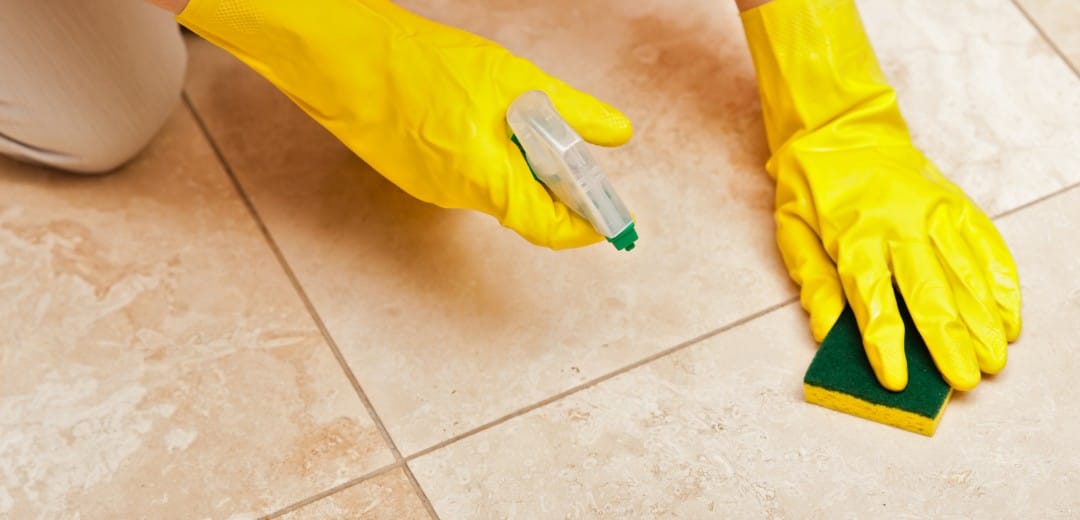
- Clean the surface with a neutral or natural stone cleaner and leave no soap residue behind.
- Allow the stone to dry completely. For a new floor, wait approximately four weeks for the adhesive and grout to cure.
- First, test the product on a scrap piece or an inconspicuous corner and assess the color and shine.
- Apply the product evenly with a brush, roller, or flat sponge, in manageable sections.
- Let it soak in according to the packaging, for fifteen to twenty minutes as indicated.
- Wipe off excess product with a clean, dry cloth before it dries, so that no film is left behind.
- For very porous stone, apply a second coat as soon as the first has been absorbed.
- Allow the treatment to cure for 24 to 48 hours and then check with a water droplet test.
Two details make the difference. Work in sections that you can wipe off within the setting time, as dried excess will leave streaks. And count on sufficient product: on porous stone, about a liter is used per four to six square meters, and on denser stone, a liter per eight to twelve square meters.
The mistake we see most often is letting excess product dry on the surface. This leaves a sticky, shiny film that you can't remove with ordinary mopping. Therefore, wipe down each zone promptly with a dry cloth, and start with a second thin layer rather than a first layer that is too thick.
Recommended solution
Fila MP90 Eco Xtreme
A penetrating impregnating agent with a natural effect that makes natural stone, marble, and polished porcelain water- and oil-repellent, without forming a visible film. Suitable for kitchen, bathroom, and living room floors.
from € 36,00
For a bathroom or a small surface area, the 375-milliliter bottle suffices. The 1-liter bottle covers approximately 25 to 30 square meters and is the logical choice for a residential floor, while a 5-liter package is available for large projects. All three are part of the maintenance line on our tile care page , which also features cleaners and grout protectors.
Product choice
Which waterproofing agent do you choose for indoors and outdoors?
The space determines the type of protection. Indoors, it is all about stains: oil in the kitchen, cosmetics in the bathroom, wine in the dining room. A stain-repellent impregnator gives you time to react before moisture penetrates. Outdoors, water and frost are the main concerns. A water-repellent agent keeps out driving rain and limits frost damage, because less moisture remains in the stone that can freeze.
The finish also plays a role. On a rough, unpolished surface, an impregnation layer is barely noticeable. On polished marble or granite, you consciously choose between a product with a natural effect that leaves the color untouched, and a variant that actually saturates the tint for a deeper, wet-looking result. Always test that difference on a scrap piece first.
According to Fila's product data (2026), a water-repellent agent like Fila Hydrorep Eco tackles outdoor work: it keeps the stone breathable and repels rain on the patio and facade. If you want to leave the color of polished stone untouched indoors, a water-based impregnator with a natural effect, such as Fila Stone Plus Eco, provides an invisible result. This way, you match the product to the location and the desired effect.
Choose material and protection at once. Assess the surface in real life and tailor the impregnation to the application.
Maintenance
How do you maintain impregnated natural stone?
Maintaining a protected floor is light work. A neutral cleaner and clean water suffice for daily tasks; avoid aggressive, acidic cleaning agents, as they damage both the impregnation and the calcareous stone. This way, the layer remains intact longer and the stone stays uniform.
How long a treatment lasts depends on the location. Indoors in a dry room, it will easily last three to five years. In a wet bathroom, kitchen, or outdoors, the protection wears off faster, and you often need to repeat it annually to every two years. The water droplet test is your yardstick: drop some water onto the stone, and as long as it beads, you are good. If it soaks in and turns the stone dark, the surface requires a new coat.
Sample package
How do you choose low-maintenance tiles and request samples?
Maintenance starts with the choice of material, not with cleaning. If you want to avoid the annual impregnation of porous stone, a dense tile is the answer. A porcelain stoneware natural stone look combines the character of marble or travertine with the convenience of ceramic, and maintains the look without the burden of maintenance. This shifts the focus from maintenance to design.
In the projects handled through us, we see architects who consciously choose this natural stone look to keep maintenance low. Pamesa Ceramica from Spain, known for its hydrogen-powered production, offers a wide range of porcelain tiles with marble and travertine looks for this purpose. In our showroom in Utrecht, you can place these tiles side by side and bundle your selection in the Sample Map so that the wall and floor align. The showroom is available to professionals by appointment.
Assemble your sample package per room. Filter by application, request free samples, and assess surface area and maintenance in advance.
Bathroom tiles Kitchen tiles View the tile collection Open the Sample Folder
Impregnation is the protection step after cleaning. The complete maintenance approach for your floor is described in the guide on cleaning ceramic tiles.
Frequently asked questions
How often should you impregnate natural stone?
Indoors in a dry room, allow approximately three to five years; in wet rooms and outdoors, often annually to every two years. The water droplet test provides the answer: drop some water on the stone and see if it beads. If the moisture soaks in and a dark spot appears, it is time to re-impregnate. This way, you work based on the condition of the stone rather than a fixed date.
Can you impregnate natural stone yourself?
Yes, impregnation is easy to do yourself with a clean surface, a brush or roller, and some patience. First, clean the stone, let it dry completely, and apply the product evenly. The most important thing is to wipe off excess product before it dries so that no film is left behind. Work in manageable sections and ensure fresh air in the room.
Do you also need to impregnate porcelain?
No, dense porcelain with a water absorption of up to 0,5 percent absorbs hardly any moisture and virtually never needs to be impregnated. That is precisely the difference compared to porous natural stone, which does require the treatment. A natural stone look in porcelain provides the appearance of stone with the convenience of ceramic. This way, you maintain the look without the annual treatment.
How long does impregnating agent need to dry and cure?
The product is usually surface-dry after two to eight hours, depending on temperature and ventilation. The treatment is generally fully effective and load-bearing after 24 to 48 hours. Walk and mop over the surface as little as possible during this period. Outdoors, wait for a dry period of at least 24 to 48 hours without rain.
Can you undo the impregnation of natural stone?
A penetrating impregnating agent sits in the pores and slowly wears off naturally through use and cleaning. If you want to start again sooner, clean thoroughly with a suitable cleaner and apply a new layer. A film-forming coating is more difficult to remove and sometimes requires a special stripper. That is a reason to choose a penetrating agent for natural stone.
Does impregnation change the color of natural stone?
A penetrating water-based impregnating agent usually leaves the color unaffected and preserves the natural appearance. Some agents, however, deliberately enhance the tint for a saturated, wet-looking effect. If you are unsure about the result, always test first on a scrap piece or an inconspicuous corner. This way, you can see in advance how the stone reacts.
Protect your natural stone well
Choose a penetrating impregnator that matches the stone, or request free samples for a low-maintenance tile.
Sources
- NEN-EN 14411:2016 – Ceramic tiles: definitions, classification and water absorption groups.
- NEN-EN-ISO 10545-3:2018 – Determination of water absorption and porosity of ceramic tiles.
- Fila Solutions (2026) – Product data MP90 Eco Xtreme, Stone Plus Eco and Hydrorep Eco: solvent-free or water-based, stain- and water-repellent, breathable.
- Industry guidelines for natural stone maintenance – Curing time for new tiling, water droplet test, and neutral cleaning after impregnation.
- Building Decree 2012 – Performance requirements for floor finishes in wet and outdoor applications.