
Cleaning ceramic tiles: complete guide by problem

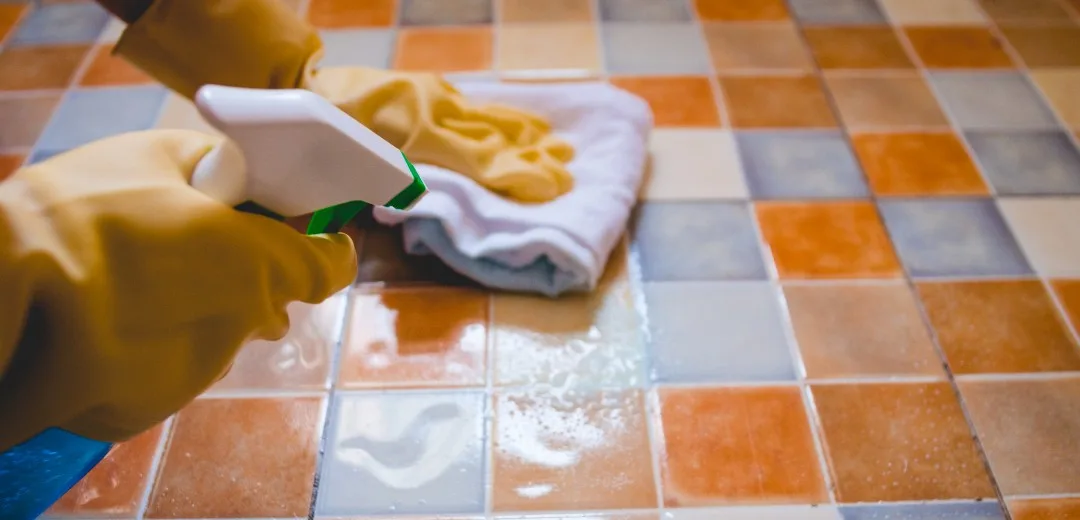
In short: cleaning ceramic tiles is done with a pH-neutral cleaner and lukewarm water, not with vinegar or baking soda. For daily maintenance, a neutral cleaner is sufficient; tackle stubborn stains specifically by type of stain.
This guide provides the safe basic method, a fair comparison of resources, and a route to the right step-by-step plan for each problem. Unsure about the material of your tiles? Request free samples via tegelmonsters.nl/tegels.
In this guide
- The safe basic method for ceramic tiles
- Which product is safe, with a comparison
- By problem: lime, grout, cement haze, mold, and rust
- Keep clean and protect for longer
- Which is counterproductive when cleaning
By Osman Orman · Tile and technical specialist at Tegelmonsters
How can you clean ceramic tiles without damaging them?
The basic method
Clean ceramic tiles with a pH-neutral cleaner diluted in lukewarm water, followed by thorough rinsing. This dissolves grease and dirt without damaging the tile, grout, or protective layer. Save strong household remedies like vinegar or baking soda for specific problems, not for everyday use.
A glazed ceramic tile is dense and wear-resistant, but the glaze, the grout, and any impregnation layer each react differently to cleaning agents. The standard for chemical resistance, NEN-EN-ISO 10545-13, assumes a smooth, dense top layer; aggressive agents used day in and day out undermine precisely that property. The sequence is therefore simple: first remove loose dirt with a vacuum cleaner or broom, then mop with a neutral cleaner, and only use a stronger agent if a neutral cleaner does not solve the problem.
Always mop with clean water and change the water as soon as it becomes cloudy. Smearing dirty water is the most common cause of dull spots and streaks. On dark or polished tiles, drying with a microfiber cloth helps prevent drips.
In five steps, the basic method looks like this:
- First, remove the loose dirt with a vacuum cleaner or a soft broom.
- Make a solution of a pH-neutral cleaner in lukewarm water, dosed according to the packaging.
- Mop in strips and work from the furthest corner towards the door.
- Change the water as soon as it becomes cloudy and rinse with clean water if in doubt.
- Dry dark or polished tiles with a microfiber cloth to prevent drying edges.
Which cleaning product is safe for ceramic tiles?
Resources compared
The safest product for regular cleaning is a pH-neutral cleaner. Neutral cleaners have a pH of around 7 and do not damage the grout or protective layer. Acidic and strongly alkaline agents work quickly, but are intended for a specific problem and have a downside. The comparison below shows what is suitable for which situation.
| Medium | For what | Note |
|---|---|---|
| pH-neutral cleaner | Daily and weekly maintenance | Safe for tile, grout, and natural stone |
| Acidic cleaner | Limescale and cement haze | Not on cement grout or calcareous natural stone |
| Alkaline degreaser | Fat in the kitchen and hospitality industry | Rinse well, may leave residue |
| Vinegar or baking soda | Home remedy, limited effect | Damages grout and natural stone, see further below |
The rule of thumb: a neutral cleaner is your standard, and you only switch to an acidic or alkaline agent if a specific problem calls for it. This way, you keep the grout and the protective layer intact, and limit wear on the top layer over the years.
Advice from the specialists at Tegelmonsters
In practice, we see that most damage does not come from dirt, but from using too much or too strong a product. Keep a neutral cleaner as a standard base and only use a specific product when a problem really calls for it. This way, the grout remains intact and the floor stays beautiful for years longer.
How do you clean ceramic tiles by material and finish?
By material
Not every tile requires the same approach. A glazed, dense tile can withstand almost anything, but an unglazed, polished, or matte finish is more susceptible to scratches and ingrained stains. Therefore, the finish determines the cleaning product just as much as the dirt itself.
| Material or finish | Method | Note |
|---|---|---|
| Glazed porcelain | Neutral cleaner, tolerates an acidic or alkaline agent if necessary | The grout remains the weak point, not the tile. |
| Unglazed or matte | Neutral cleaner, occasional deep cleaner for ingrained dirt | More porous, so stains more easily; impregnating helps |
| Polished or glossy | Neutral cleaner, dry with a microfiber cloth | Shows streaks and dry edges quickly; not an abrasive |
| Natural stone look and real natural stone | Neutral or acid-free cleaner | Never treat real calcareous stone with acid; a ceramic look is allowed. |
The main distinction lies between ceramic and real natural stone. A ceramic tile with a natural stone look is still ceramic and can withstand a wide range of cleaning agents. Real calcareous natural stone, such as marble and travertine, cannot tolerate acid, even if the stain seems to call for it. If you are unsure what you are dealing with, a neutral cleaner is always the safe choice.
How do you tackle specific stains and grime?
Per problem
If residue or a stain remains after routine cleaning, the type of stain determines the approach. Each problem requires a specific product and a specific step-by-step plan. Below are the most common problems, along with the route to the correct step-by-step plan.
For each of these problems, we have a separate, detailed step-by-step plan:
- Removing limescale calls for a buffered acid cleaner, safely dosed and not on natural stone.
- Cleaning grout This works with a targeted grout cleaner, tailored to the type of dirt.
- Remove cement haze After new tiling, use a buffered cement haze remover.
- Removing mold from the bathroom Tackle it with a mold cleaner, not with vinegar or baking soda.
- Remove rust stains Use acid-free, especially on natural stone and outdoor tiles.
Not sure what material your tiles are made of?
The right cleaning approach depends on the material and the finish. Request free samples and view the range.
How do you keep ceramic tiles clean longer?
Maintenance and protection
Keeping things clean for longer starts with the right daily product and the correct dosage. A pH-neutral cleaner used slightly diluted leaves no film behind that attracts dirt. A porcelain tile with very low water absorption requires little else; a porous surface or natural stone is protected by impregnation, so that dirt and moisture penetrate less quickly.
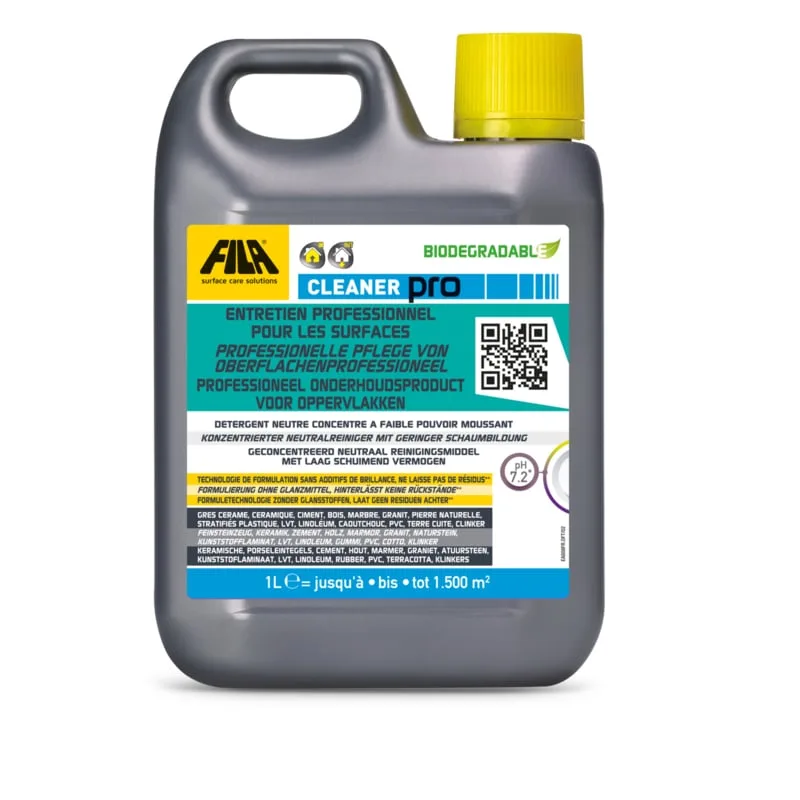
Recommended for daily maintenance
Fila Cleaner Pro
pH-neutral cleaner for ceramics, porcelain, and natural stone. Cleans grease and dirt without damaging the protective layer; no rinsing required. From EUR 19,25 (1 liter), or EUR 59,55 for 5 liters.
If you really want to protect porous tiles or natural stone against penetrating dirt, impregnating the natural stone is the next step after cleaning. An impregnated surface absorbs less moisture and stains, making routine maintenance easier and extending its lifespan.
How do you tackle cleaning room by room?
Per room
The space determines the type of dirt you expect and how often you clean. In a bathroom, it is about moisture and limescale; in a kitchen, grease; in a hallway, street dirt; and outdoors, green deposits. The basis remains a neutral cleaner; only the emphasis differs.
- Badkamer: Moisture causes limescale and mold. Ventilate well, dry off briefly after showering, and grab Lime scale en schimmel addressed to
- Kitchen: grease and caked-on dirt. A neutral cleaner is usually sufficient; for stubborn grease, an alkaline degreaser, followed by thorough rinsing.
- Hall and living room: Sand and street dirt abrade the top layer. A good doormat and regular vacuuming do more than any cleaning product.
- Outside: Green deposits and algae. Clean on a cloudy day, rinse thoroughly, and choose a product that does not damage frost-resistant outdoor tiles or the grout.
How often is enough? For most rooms, sweeping or vacuuming daily and mopping once or twice a week is more than sufficient. In a kitchen or busy hallway, you can do it more often; in a guest room, less often. More important than the frequency is a light dosage: too much product actually leaves behind a film that attracts dirt.
What has the opposite effect when cleaning ceramic tiles?
What you better not do
Most damage is caused not by dirt, but by the wrong approach. Three commonly recommended home remedies actually have the opposite effect on ceramic tiles.
Vinegar is acidic and slowly dissolves cement grout; on calcareous natural stone such as marble and travertine, it dulls the stone. Soda and abrasive cleaners scrub the top layer and leave residues that attract dirt. Green soap and floor wax form a greasy film to which dust adheres, causing the floor to get dirty again faster. For the full story on why vinegar and soda damage grout, read cleaning grout.
The common thread: choose a product that suits the material and the soiling, rather than a strong household remedy that works in the short term but destroys the grout and the protective layer in the long run. That is exactly what a neutral cleaner for daily cleaning and a targeted product for each problem do.
What does work, briefly summarized:
- A pH-neutral cleaner as a solid foundation for daily work.
- A targeted product for each problem: limescale, cement residue, mold, or rust.
- Lukewarm water and rinse well, and change the water as soon as it is cloudy.
- Dry with a microfiber cloth on dark and polished tiles.
- Impregnate porous tiles and natural stone for extra protection.
How do you put together a sample pack for your tiling project?
Assemble sample package
Low maintenance starts with the choice of tile. A dense, glazed porcelain tile is easier to keep clean than a porous or unglazed variant. If you are unsure which tile and finish suits your space, request free samples and assess them in your own light and on your own surface.
Put together your sample pack
Frequently asked questions
What is the best way to clean ceramic tiles?
With a pH-neutral cleaner, diluted in lukewarm water. Neutral cleaners dissolve grease and dirt without damaging the tile, the grout, or any protective layer. Save acidic and strongly alkaline agents for a specific problem, such as limescale or cement haze, not for daily work.
Is vinegar bad for ceramic tiles?
The glazed tile itself usually tolerates vinegar, but the grout and calcareous natural stone do not. Vinegar is acidic and eventually dissolves cement grout and dulls marble or travertine. Therefore, for regular cleaning, choose a neutral cleaner, not vinegar.
How do you make dull ceramic tiles shiny again?
Dull spots are usually caused by a layer of soap residue, limescale, or the use of an unsuitable cleaning product. First, clean thoroughly with a neutral or mildly degreasing cleaner and rinse well. If the dullness persists, there is often limescale or cement residue present, which requires separate treatment.
How often should you clean a ceramic floor?
Vacuuming or sweeping daily and mopping once or twice a week with a neutral cleaner is sufficient for most rooms. In a kitchen or hallway with high traffic, you may need to do this more often. More important than the frequency is not to use too much product, as residue actually attracts dirt.
Can you clean ceramic tiles with a steam cleaner?
On glazed porcelain, a steam cleaner can work well for dirt and bacteria. Be careful with older or porous grout and natural stone, as heat and moisture can damage them. Always test on an inconspicuous area first and keep the steam moving.
How do you prevent streaks on ceramic tiles?
Streaks are caused by using too much product or not rinsing enough. Dose the cleaner according to the packaging, use clean water, and change the water as soon as it becomes cloudy. Drying with a microfiber cloth prevents drying edges on dark and polished tiles.
Choose a tile that stays clean easily
Request free samples and evaluate the tiles on your own surface, or ask our specialists your question.
Sources
- NEN-EN-ISO 10545-13:2016 – Ceramic tiles: determination of chemical resistance.
- NEN-EN 14411:2016 – Ceramic tiles: definitions, classification and water absorption groups.
- Fila Solutions (2026) – Product data Fila Cleaner Pro: pH-neutral cleaner, suitable for daily maintenance of ceramics, porcelain, and natural stone, no rinsing required.
- Industry maintenance guidelines for ceramic tiling – dosage, rinsing and avoiding film-forming agents.