Removing limescale: safe product for each surface

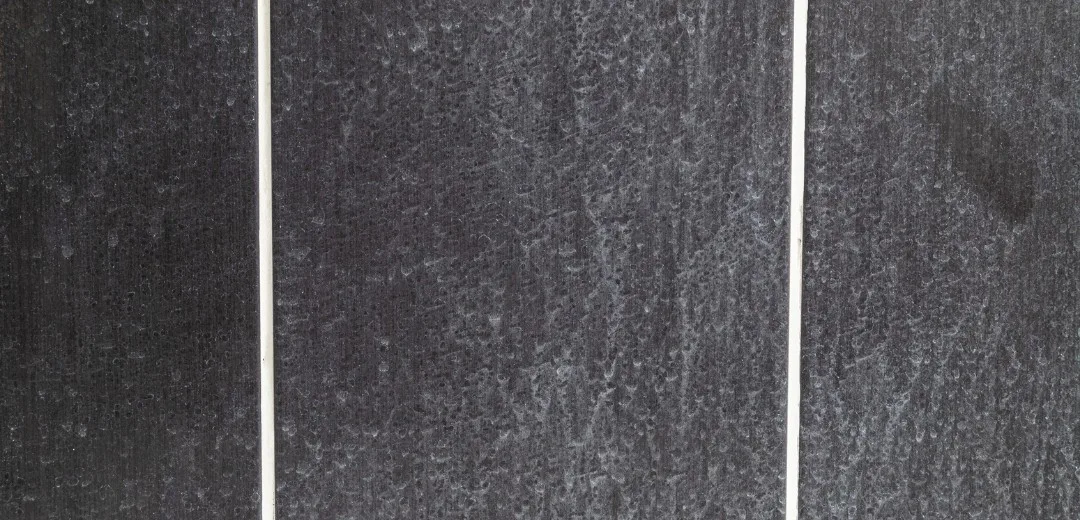
By Osman Orman · Tile and technical specialist at Tegelmonsters
Limescale is removed with a diluted, buffered acid cleaner on acid-resistant ceramics and with an acid-free agent on natural stone. The substrate determines the approach.
The cause lies in the water itself. Hard water leaves limescale behind as it evaporates, and precisely in a warm shower or kitchen, that film returns quickly as a result.
Limescale is a white deposit that forms when hard water evaporates, leaving behind dissolved calcium. On acid-resistant ceramics and porcelain, tackle it with a diluted buffered acid cleaner; on calcareous natural stone, use an acid-free agent. Work on a pre-wet surface, let the product sit for 5 to 10 minutes, and rinse thoroughly. If you are unsure about the substrate, request free samples via tegelmonsters.nl/tegels and test on a scrap piece first.
In this article
- How can you remove limescale from tiles?
- What is limescale and why does it form?
- Does vinegar work against limescale or not?
- What step-by-step plan do you use to remove limescale?
- How do you remove limescale from natural stone?
- How do you prevent limescale on tiles?
- How do you choose low-maintenance tiles and request samples?
- Frequently asked questions
Method
How can you remove limescale from tiles?
The safest route depends on the material under your hands. A dense ceramic tile tolerates diluted acid well, whereas a calcareous natural stone will become dull from it. So, first determine what is present: glazed ceramic, porcelain, terracotta, or natural stone. Only then choose a product. This order prevents you from damaging a beautiful surface while removing the white haze.
There are four methods, increasing in strength. Clean water with a sponge only removes a fresh, very light film. A diluted acid dissolves limescale on acid-resistant ceramics. An acid-free, alkaline cleaner is available for natural stone. And for a dried-in, stubborn layer, increase the concentration slightly or repeat the treatment. In all cases, wet the surface beforehand so that the product continues to work at the top and does not sink into the pores or the grout.
In our showroom in Utrecht, we see that professionals mainly ask how to remove limescale without damaging the grout or the shine. The answer lies in dilution and patience: start with a weak solution, let the product work, and rinse thoroughly. If you would like to assess the surface carefully first, our explanation on cleaning tiles will help you further. Our team is happy to help with challenging surfaces.
Cause
What is limescale and why does it form?
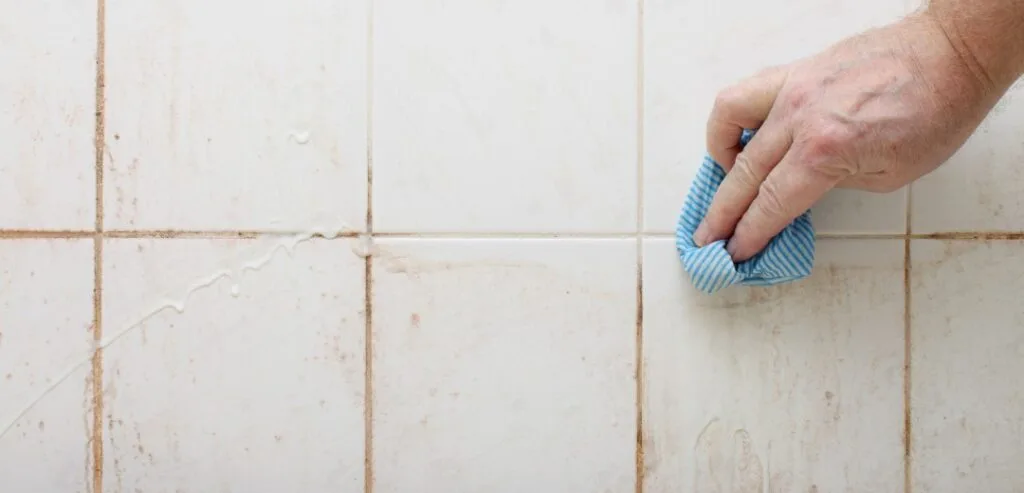
Limescale is dissolved in tap water as calcium and magnesium. When the water evaporates, these minerals remain behind as a thin, white film on the tile. The amount of limescale in the water is called water hardness, usually expressed in degrees of German hardness (dH). The higher this value, the faster a visible layer forms. Dutch tap water averages around 8 dH, which counts as soft to moderately hard; water harder than 18 dH is virtually non-existent here.
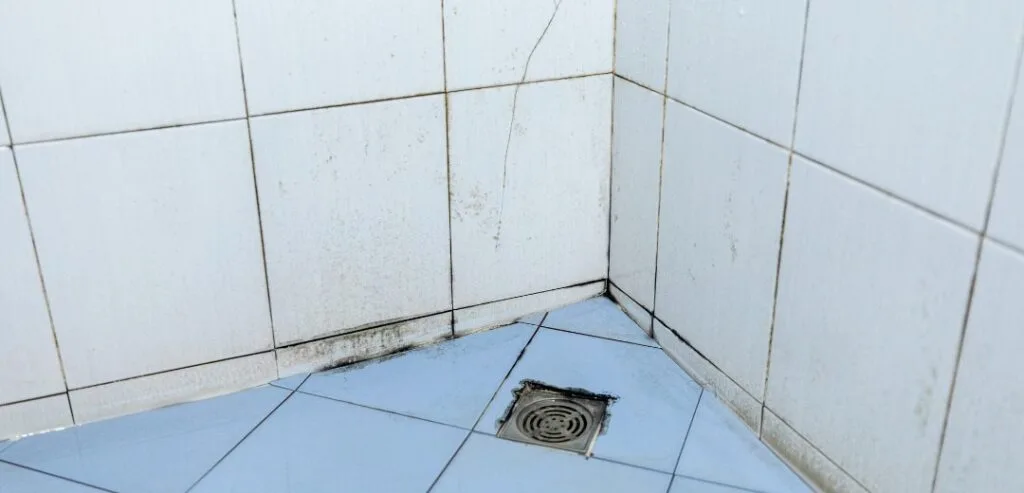
Two circumstances make the buildup worse. Heat accelerates evaporation, so limescale settles faster in a hot shower than on a cold floor. And a surface that often gets wet and dries slowly accumulates layer after layer. That is why limescale is most visible on glass walls, taps, and tiles around the shower. Moreover, the white haze stands out more on a dark or polished tile than on a light, matte tile.
Water hardness and rate of limescale formation
Higher hardness in degrees of German hardness (dH) means more dissolved lime and therefore faster scale formation. The scale runs up to 20 dH.
Limescale is therefore not dirt from the outside, but a precipitate from the water. This differs from cement haze, the film left behind by the grout after grouting. If you are treating a newly finished floor, read how to tackle cement haze removal , as hardening and the grout play a role in this. If the grout is particularly full of deposits, our explanation on cleaning grout is more suitable.
Home remedies
Does vinegar work against limescale or not?
Vinegar and cleaning vinegar contain acetic acid, a weak acid that dissolves limescale. On a smooth, acid-resistant ceramic tile, a dilution of half water and half vinegar often partially removes light stains. So far, the well-known advice is correct. The point lies in the limitation: vinegar is a simple acid without a buffer, so the acidity drops during the soaking process and the result becomes uneven. On a large wall, you notice this as spots that do and do not get clean.
There are two situations in which a home remedy like vinegar is less suitable. Fresh cement grout is still sensitive, and an acid can dissolve the top layer of that grout, causing the seam to become rough. Limestone such as marble, travertine, and bluestone reacts with any acid and loses its shine. Therefore, keep in mind that vinegar and lemon juice do more harm than good on those surfaces. For ceramics, they are a last resort, not a structural solution.
The most frequently asked question our team receives concerns that difference in substrate. When removing limescale, water absorption determines how much moisture, and therefore cleaner, a tile absorbs. You can read why a dense tile tolerates acid better in our explanation of the water absorption of ceramic tiles . A low value indicates a dense tile that absorbs little product, so you can dose more carefully.
Step-by-step plan
What step-by-step plan do you use to remove limescale?
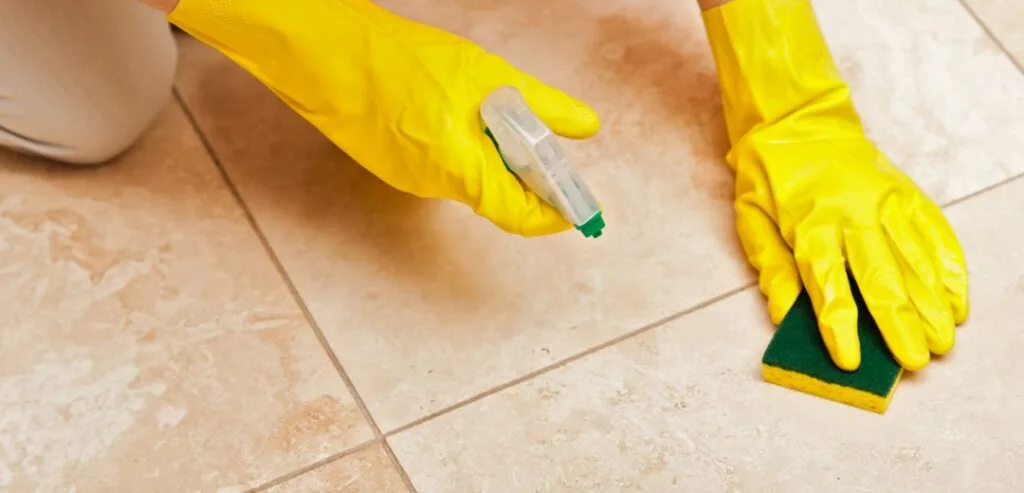
A fixed work sequence makes limescale removal predictable. These seven steps apply to acid-resistant ceramics and porcelain. For natural stone, replace the acidic agent with an acid-free variant; the rest of the sequence remains the same.
- First remove loose dirt and soap residue with clean water so that the product works directly on the limescale.
- Wet the surface beforehand so that the cleaner works at the top and does not sink into pores or joints.
- Dilute the product according to the packaging, usually 1:5 to 1:10. For a dried-out layer, use a 1:3 ratio.
- Apply the solution evenly with a sponge or flat mop over an unobstructed area.
- Leave on for 5 to 10 minutes. Do not let the product dry out; therefore, work in strips.
- Finish scrubbing with a soft hydro sponge or a white pad in a circular motion.
- Rinse once or twice with clean water until the rinse water is clear, and then dry.
Two details determine the final result. Work in areas that you can rinse within the contact time, as dried acid leaves streaks behind. And change your rinse water frequently, otherwise you will reapply dissolved lime. Wear gloves and safety glasses when working with an acidic cleaner, and ensure ventilation in the room. This simple precaution is standard practice for this type of maintenance.
What we often see is a solution that is too strong on a dry tile. The acid then bites in unevenly and leaves light rings. Always work on a pre-wetted surface, start with the weakest dilution, and only increase it if necessary. A scrap piece or tile sample is the best test spot before tackling an entire wall or floor.
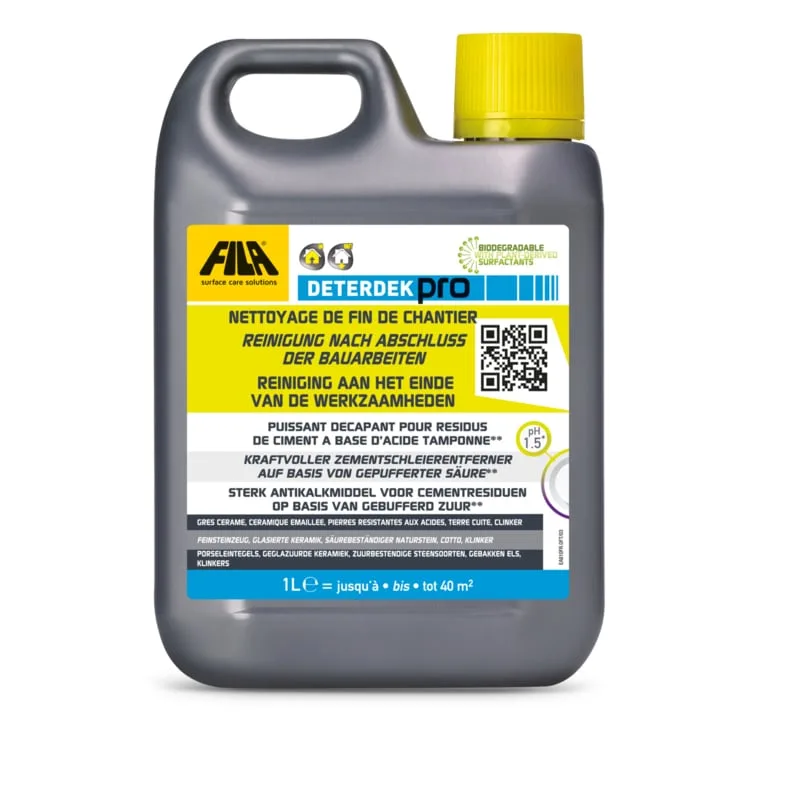
Recommended solution
Fila Deterdek Pro
A buffered acid cleaner that dissolves limescale, cement residue, and construction debris without damaging the tile or grout. The buffer keeps the action even, ensuring a smooth result on acid-resistant ceramics and porcelain.
from € 18,95
For a single bathroom, the 1-liter bottle is sufficient, covering approximately 40 square meters at a 1:5 dilution. If you are working on a larger surface area or multiple rooms, there is also a 5-liter package available that works out more economically per square meter. Both are part of the maintenance line on our tile maintenance page , where you will find more solutions for specific stain types.
Natural stone
How do you remove limescale from natural stone?
The reason why acid causes dull spots on natural stone lies in chemistry. Limestone consists largely of calcium carbonate, the same substance as the limescale itself. An acid makes no distinction: it dissolves the deposit but simultaneously eats into the stone underneath. Where the acid touches the stone, the polished top layer disappears, leaving behind a matte, rough spot—an etching. On glossy marble, this is immediately visible as a dull ring that cannot be polished away. Therefore, the substrate separates the approach and determines which product is safe when removing limescale.
Ceramics behave differently. Ceramic tiles are fired clay with a glassy structure, chemically stable, and resistant to weak acids. According to the chemical resistance standard, ISO 10545-13 , dense porcelain withstands household cleaners and weak acids without damage. Porcelain is highly compacted ceramic with very low water absorption. The EN 14411 standard defines this water absorption : the lower the value, the denser the tile and the less cleaner it absorbs.
If you are unsure whether you are dealing with ceramic or real stone when dealing with a natural stone look, a scrap piece will provide the answer. A dense ceramic tile with a clean, polished edge is almost always porcelain, and our explanation of rectified tiles shows how to recognize that edge finish. Rectified tiles have finished, perfectly straight edges. For real calcareous natural stone, choose an acid-free agent and test it first, even if the stone looks robust.
Prevention
How do you prevent limescale on tiles?
The best way to eliminate the need to remove limescale is to prevent water from drying on the tile. In a shower, using a squeegee after every use makes the biggest difference: no standing water means no precipitation. Running a window squeegee over the glass wall and tiles removes most of the moisture in a few seconds. This simple habit does more than any product and keeps the surface clear for weeks.
A second approach tackles the source. A water softener reduces the hardness of tap water, meaning there is less lime in the water to precipitate. At the tile level, impregnation helps with porous materials: it seals the pores, so lime and dirt have less grip and are easier to wipe away later. This is rarely necessary with dense porcelain, but it is for terracotta and some natural stone. Choosing the right tiles therefore reduces maintenance and makes removing limescale easier later on. You link this choice to the PEI value and the use of the space . The PEI value indicates how wear-resistant the top layer is.
Choose a tile that retains little lime. A dense, rectified porcelain tile makes removing limescale simple and stays looking sleek for a long time. Assess the surface in person first.
Sample package
How do you choose low-maintenance tiles and request samples?
Maintenance starts with the choice, not the cleaning. A dense porcelain tile with a clean-cut edge offers little grip for limescale and is easy to keep clean. The grout color determines how quickly a haze appears: a medium shade is more forgiving than pure white or jet black. Anyone who takes these points into account during the design phase will keep the tiles looking pristine for years using only water and a mild cleaner. This saves time and cleaning products, and makes removing limescale later on a matter of light touch-ups.
With a sample pack, you assess those properties before ordering. You place three to five tiles of the intended size side by side, test a cleaner on a scrap piece, and immediately see how the surface reacts. In the projects managed by us, architects and project managers bundle this selection in the Sample Pack so that the wall and floor match. The showroom in Utrecht is available for physical assessment, by appointment for professionals.
Assemble your sample pack per room. Filter by application and size, and request free samples to assess surface, grout color, and maintenance in advance.
Bathroom tiles Kitchen tiles View floor tiles Open the Sample Folder
Limescale is one of the types of deposits on a tiled floor. You can find the safe basic method and the approach for each stain in our guide on cleaning ceramic tiles.
Frequently asked questions
Which product works best against limescale?
On acid-resistant ceramics and porcelain, a diluted, buffered acid cleaner works best, as it dissolves the lime evenly without damaging the grout. On calcareous natural stone, use an acid-free, alkaline agent. Vinegar and lemon juice are a last resort for ceramics, but not a structural solution. Always choose the product based on the substrate.
Does vinegar work against limescale?
Diluted vinegar is a weak acid and partially dissolves light limescale on acid-resistant ceramics. Vinegar is not buffered, so its effectiveness diminishes rapidly during soaking and the result becomes uneven. Vinegar is unsuitable for calcareous natural stone such as marble and travertine, as it dulls the stone. A buffered acid cleaner provides a more predictable result.
Can you remove limescale from natural stone?
Yes, but only with an acid-free, alkaline cleaner. Limestone itself consists largely of lime, so an acid dissolves the stone in addition to the stains and leaves a dull spot. Test the product on an inconspicuous area first and then rinse thoroughly. For dense porcelain, you may use a diluted acid cleaner.
Why does limescale keep coming back?
Limescale forms when hard water evaporates and the dissolved calcium remains on the surface. Dutch tap water averages around 8 degrees dH, which is soft to moderately hard. In a warm, humid shower, water evaporates quickly, so new limescale adheres within a few days. Drying the shower after use and using a water softener limit its recurrence.
How do you remove stubborn limescale from tiles?
First wet the surface, apply a stronger dilution, for example 1:3, and let it work for 5 to 10 minutes without drying. Buff with a soft pad and rinse once or twice. It is better to repeat the treatment than to increase the concentration further. For natural stone, choose an acid-free product instead of acid.
Is limescale harmful to tiles?
A thin film of lime does not damage a glazed or dense ceramic tile, but it dulls the surface and attracts dirt. If the deposits remain for a long time, they adhere more strongly and become harder to remove. On natural stone, however, improper cleaning with acid can cause damage. Working early and with the right product keeps limescale removal simple; if you are unsure about the tile, request free samples via tegelmonsters.nl/tegels.
Remove limescale quickly and safely
Tackle the white haze with a professional product, or request free samples to choose a low-maintenance tile.
Sources
- NEN-EN-ISO 10545-13:2016 – Ceramic tiles: determination of chemical resistance to household cleaners and weak acids.
- NEN-EN 14411:2016 – Ceramic tiles: definitions, classification and water absorption groups.
- International water hardness scale in degrees German hardness (dH) – classification soft, moderately hard, hard and very hard.
- Fila Solutions (2026) – Deterdek Pro product data: buffered acid cleaner, dilution and area of application.
- Industry guidelines for ceramic tiling and maintenance – pre-wet, work diluted, rinse, and test on a scrap piece.